Pickleball Grips Guide: 3 Powerful Grip Techniques Every Player Should Know
One of the most overlooked skills in pickleball is something incredibly simple is how you hold the paddle.
Your grip affects:
- topspin
- control
- backhands
- volleys
- reaction speed
- consistency
In fact, the wrong grip can completely limit your game—even if your technique is solid.
In this complete guide, we’ll break down the main pickleball grips, their pros and cons, and how top players use them during real gameplay.
Quick Answer
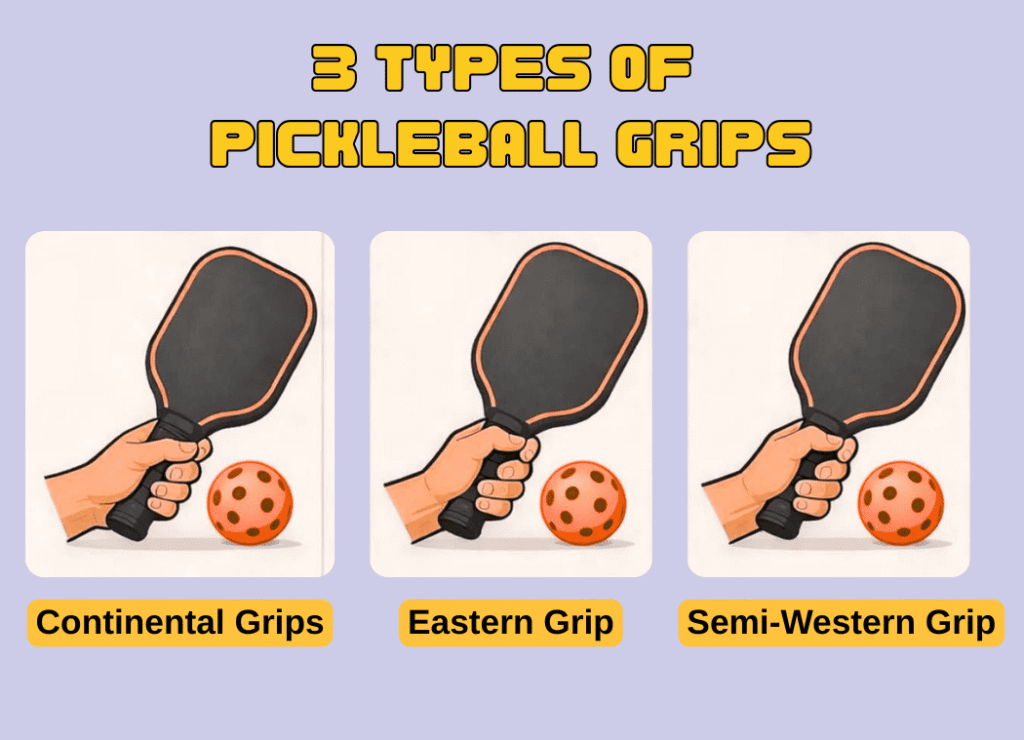
The three main pickleball grips are: Continental Grip, Eastern Grip and Semi-Western Grip.
Most players perform best using either a Continental or Eastern grip.
Why Grip Matters in Pickleball
Unlike tennis, pickleball is played on a much smaller court. That means:
- Faster reactions
- Less preparation time
- Rapid kitchen exchanges
Because of this, players usually cannot change grips as often as tennis players do.
Your grip must work for forehands, backhands, volleys, dinks, drives.
Pickleball Grip Comparison Table
|
Grip |
Continental |
Eastern |
Semi-Western |
|---|---|---|---|
|
Spin |
⭐⭐⭐☆☆ |
⭐⭐⭐⭐☆ |
⭐⭐⭐⭐⭐ |
|
Backhand Comfort |
⭐⭐⭐⭐⭐ |
⭐⭐⭐⭐☆ |
⭐⭐☆☆☆ |
|
Volleys |
⭐⭐⭐⭐⭐ |
⭐⭐⭐⭐☆ |
⭐⭐☆☆☆ |
|
Control |
⭐⭐⭐⭐☆ |
⭐⭐⭐⭐⭐ |
⭐⭐⭐☆☆ |
|
Best For |
All-around play |
Most players |
Aggressive topspin |
1. Continental Grip (Hammer Grip)
The Continental grip is often called:
- the hammer grip
- the handshake grip
Imagine holding a hammer naturally.
Technically, the index knuckle aligns with bevel #2.
Excellent for: volleys, dinks, blocks, counters, slice shots.
Because the paddle face stays neutral, it’s ideal for:
► Fast kitchen exchanges
► Switching quickly between forehand and backhand.
This is why many advanced players use Continental at the kitchen line.
The biggest weakness: less natural topspin.
Generating heavy topspin requires:
► More wrist movement
► More adjustment
Best For
- Defensive players
- All-around players
- Volley-heavy play styles
2. Eastern Grip (The Most Popular Grip)
The Eastern grip is considered the best compromise in pickleball.
Technically, the index knuckle aligns with bevel #3.
► It slightly closes the paddle face.
Better topspin potential
Compared to Continental, the eastern grip is easier forehand drives, stronger roll volleys and more aggressive topspin shots.
This grip allows:
► Natural windshield-wiper motion
► Easier topspin generation
Many modern players prefer this grip.
On backhands:
► Paddle face opens more naturally
► Requires wrist adjustment
If technique is poor the backhand volleys may pop up.
Best For
- Intermediate players
- Topspin-focused players
- Modern aggressive play
► For most players, this is the ideal grip.
3. Semi-Western Grip (Aggressive Topspin Grip)
The Semi-Western grip is the most aggressive grip.
Technically:
- index knuckle aligns with bevel #4
This grip dramatically closes the paddle face.
Massive topspin potential
This grip makes it easier to:
► Hit aggressive drives
► Attack high balls
► Generate heavy topspin
Many players use this grip for serves and forehand drives.
Backhands become difficult
The paddle position becomes awkward for:
► Counters
► Backhand volleys
► Quick exchanges
It’s difficult to use at the kitchen line.
Best For
- Aggressive baseline players
- Singles play
- Heavy topspin hitters
Should You Change Grips During Play?
This is one of the biggest questions in pickleball.
The short answer:
Most recreational players should NOT constantly switch grips. This is because pickleball happens too fast.
Frequent grip changes can cause:
- Late reactions
- Mishits
- Inconsistency
What Advanced Players Do
Advanced players sometimes:
- Switch to Semi-Western for drives
- Switch back to Eastern at the kitchen
- Use specialized backhand grips for flicks
But this requires years of racket sport experience and a fast hand coordination.
► For most players, a consistent grip is better.
What Grip Should Beginners Use?
For beginners, the eastern grip is usually the best option.
Why?
Because it offers:
- Balanced forehands and backhands
- Easier topspin
- Good versatility
► It’s the safest long-term grip.
Finger Placement on the Paddle
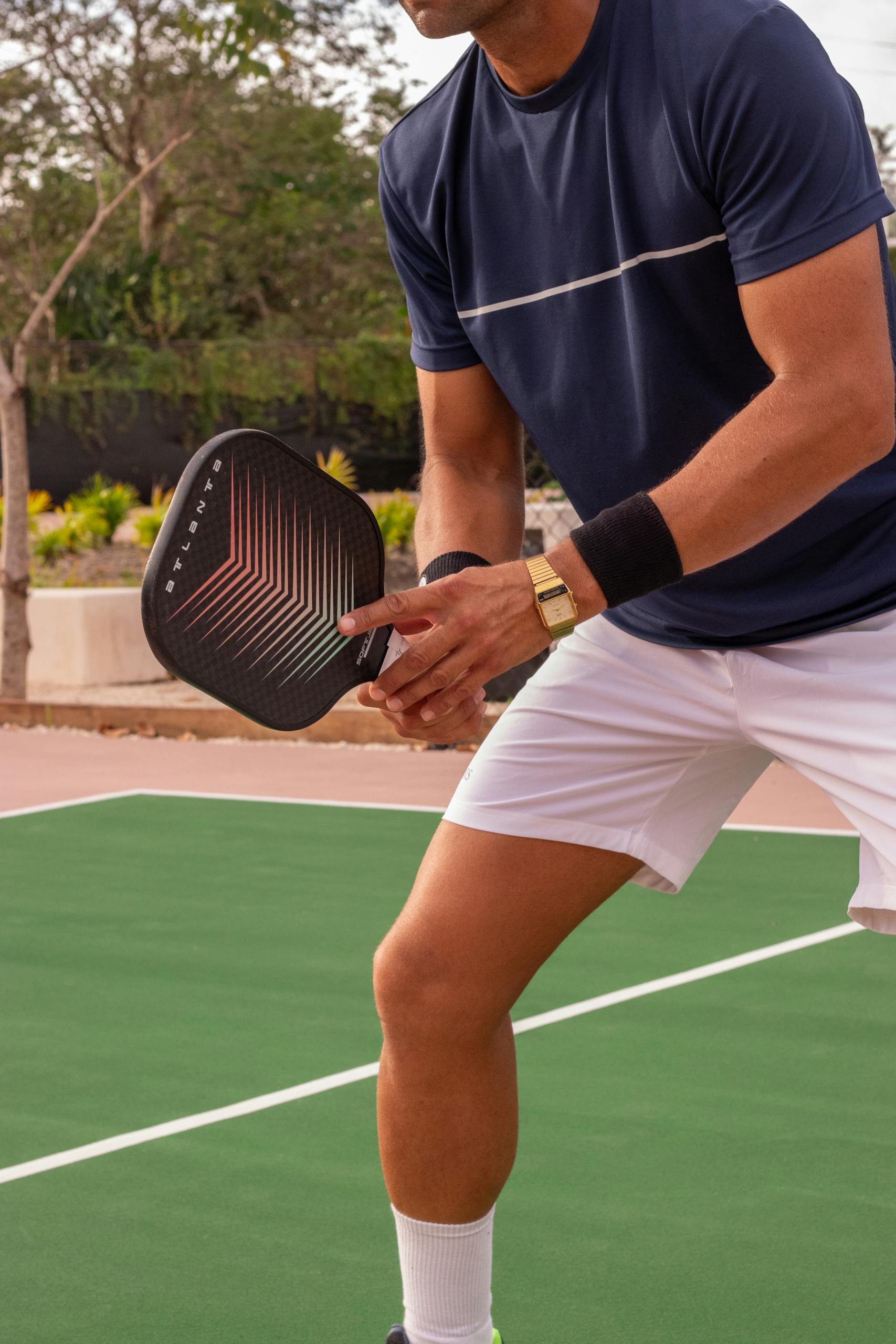
Some players place one finger, two fingers or even multiple fingers on the paddle face.
Why?
Because it improves the paddle awareness, stability and the control.
Many table tennis players prefer this style. However the fingers become more exposed to impact.
Grip Pressure Matters Too
One of the biggest mistakes is gripping too tightly. A “death grip” reduces the control, touch and feel.
Most advanced players use a loose, relaxed grip.
Benefits:
- Softer dinks
- More power with less effort
- Better resets
Final Thoughts
There is no universal “best” pickleball grip.
The right choice depends on:
- your play style
- your experience
- your preferred shots
Simple Recommendation:
► Want balance? → Eastern
► Want better volleys? → Continental
► Want maximum topspin? → Semi-Western
Final Recommendation
For most players, the Eastern grip offers the best overall balance of spin, control, and versatility.